
Homeowners were long told that a tidy lawn was a good lawn, but the high-vibrancy garden design turns all that on its head.
A tidy lawn has neat edges, no bare soil, and space between plants. Trouble is, that approach demands constant mowing, feeding, edging, and weeding.
Instead of space and standout plants, the high-vibrancy garden design packs together layers of colorful planting in a lush tapestry that looks for all the world like a top botanical garden…but is actually a smart, low-maintenance garden design.
Get the layering right and plants shade the soil, suppress weeds, cut watering, and give long-lasting structure.
This is maximalist outdoor decor with serious intent.
What Is High-Vibrancy Garden Design?
High Vibrancy Garden Design:
- Dense planting.
- Layered heights.
- Bold color combinations.
- Continuous seasonal interest.
- Reduced lawn space.
Plants are the weed barrier, no mulch, no empty ground; they fill visual and physical space.
Abundant, not sparse.
Rather than relying on mulch and empty ground, the plants themselves become the weed barrier. The goal is to fill visual and physical space.
Why I Stopped Trying to Grow the Perfect Lawn

For many years, I felt obliged to have an immaculate lawn. I fertilized, watered, and weeded assiduously, and yet, come August, it still looked puny.
One of the concerns that spurred me on the most was that I was bored of spending so much time on something that failed to provide me with any pleasure. My lawn never looked full of anything. It looked full of work.
I reached my crisis point when I stopped trying to reseed the bare spots and tried planting them instead. I scattered salvias, coneflowers, and creeping thyme seeds.
It did the trick, for no extra work whatsoever. It took a while, maybe about 12 months, but the area looked far fuller, fluffier, and more vibrant than ever. And suddenly I realized, lush planting isn’t messy. It’s just clever.
Why Lawns Are High Maintenance (And What to Do Instead)
A traditional lawn needs:
- Weekly mowing
- Fertilizing
- Irrigation during dry months
- Weed control
- Re-seeding
And they offer very little in terms of ecosystem service.
Using a colorful flower border to replace areas of lawn cuts down on maintenance in the long run.

A thick planting area eliminates weeds because it is impossible for sunlight to reach the soil. This is the secret to low-maintenance garden design.
The key to Suppressing Weeds: Layering
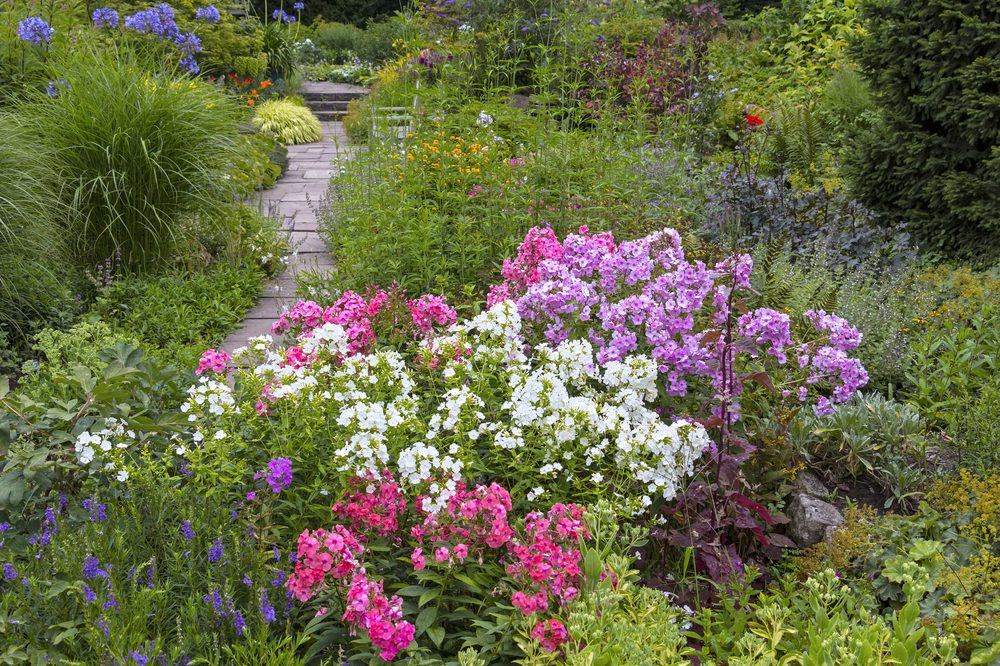
The three key layers you need to build a successful garden planting plan are as follows:
1. The Back Layer (Structural Height)
These are the tallest members of your garden. They give you height, anchor the design, and, in essence, give your flower bed walls.
Plants like:
- Hollyhocks
- Delphiniums
- Sunflowers
- Tall ornamental grasses
- Climbing roses on trellises
All of these create that vertical drama that will force the viewer’s eye upward.
2. Middle Layer (Color Mass)
These plants are responsible for the majority of the border’s color.
For instance:
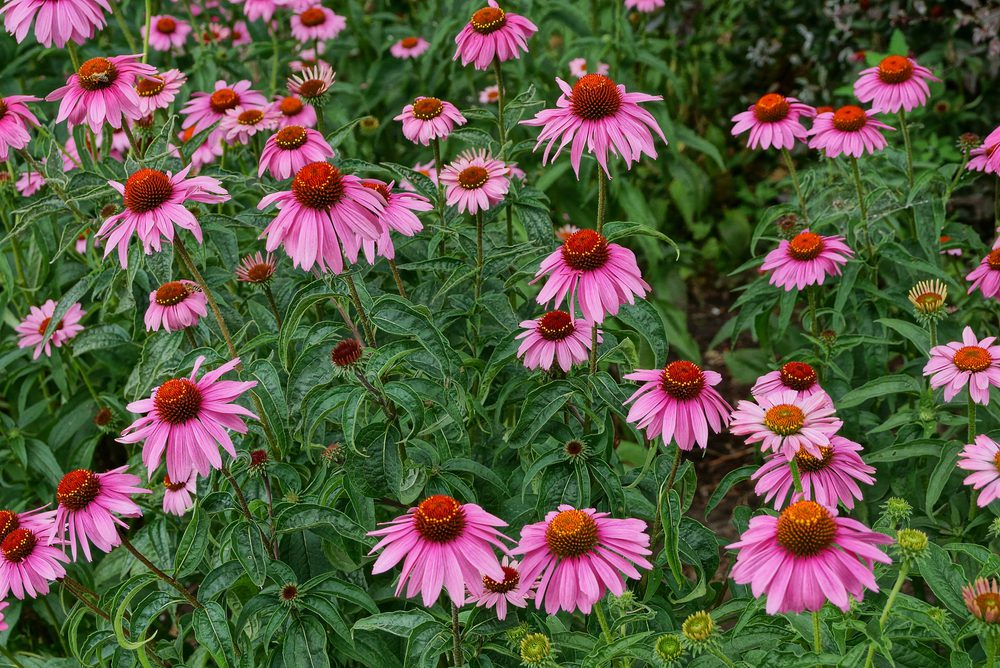
- Coneflowers
- Salvias
- Black-eyed Susans
- Dahlias
- Shasta daisies
This is your primary color theme and the layer that’s going to take up most of the border’s space.
3. Front Layer (Ground Coverage)

These plants help to suppress weeds.
For example:
- Creeping thyme
- Sedum
- Low-growing geraniums
- Lamb’s ear
- Sweet alyssum
When planted near to each other, this layer covers the ground, shading it and preventing weed seeds from getting enough light to germinate.
What I Figured Out the Hard Way About Layering
In my first few attempts at layering plants, I did what I suspect most beginners do. I spaced every plant precisely as indicated on the tag. Left plenty of room between all the plants because I was afraid of them getting too cozy.
Within a few months, the “empty” space between the plants was about knee-deep in weeds.
It wasn’t that I’d planted too many plants. I hadn’t planted enough.
Now I plant things slightly closer together than recommended on the tag, especially in the case of front-layer plants.
Let them grow together and cover the ground as quickly as possible. The difference in weed control is astonishing.
I spend half the time weeding that I used to, and twice the time just hanging out in the garden.
How to Create a Colorful Flower Border That Doesn’t Look Haphazard
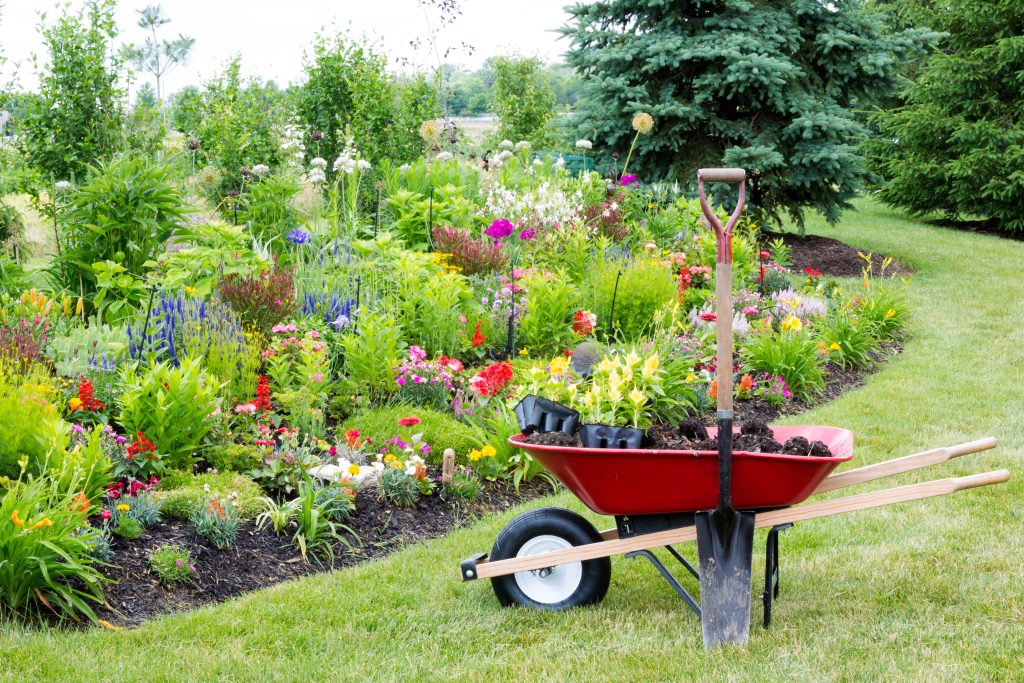
Rainbow color doesn’t have to look like a mess.
Here are 3 rules to make your flower border look intentional, not accidental.
1. Repeat Colors
Use 3 to 5 main colors and place them throughout the border. This will give your border a flow that leads the eye.
Great color pairings are:
- Pink, dark purple, and pale white
- Burnt orange, gold, and burgundy
- Blue, lavender, and silver foliage plants
Repeating elements will calm what might otherwise be a mess in a small planting space.
2. Repeat Plant Groupings

Instead of scattering interesting plants around, group them in drifts of three or five and repeat in other spots around the garden.
Life is cozy when we are surrounded by visual repeats.
3. Mix Leaf Shapes and Textures
Pair sharp, strappy leaves with the softness of rounded leaves, or large-leaved plants with delicate, airy explorers.
Texture is especially key in a maximalist garden in order to keep it from feeling cluttered.

The “No Bare Soil” Rule
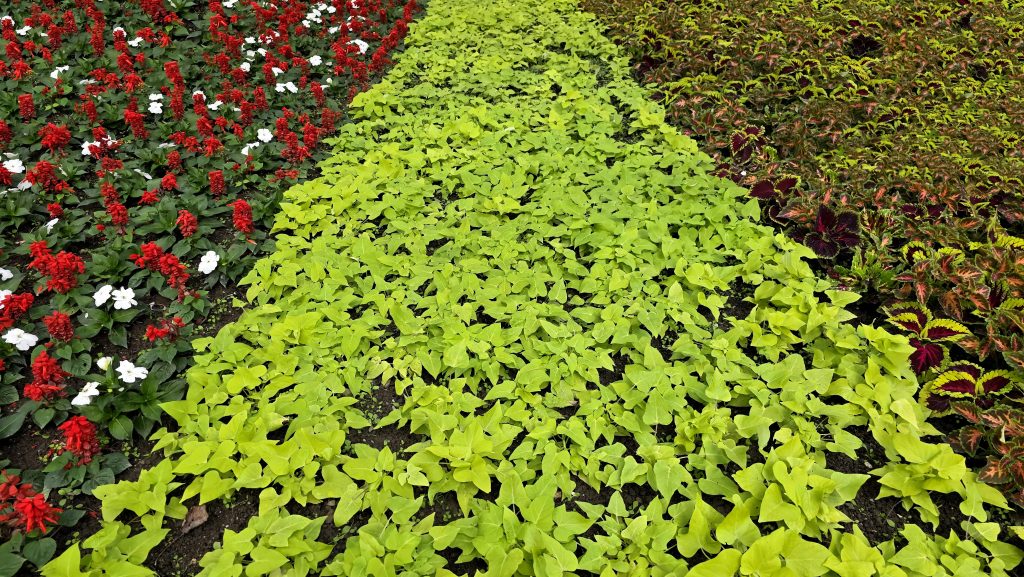
In high-vibrancy garden design, bare soil is transient.
To plant:
- Plant closer together than recommended
- Plant fast-growing fillers in year one
- Plant so that they overlap as they grow
This will create a self-shading environment.
The less light that hits the soil, the less weeding you’ll have to do.
The Year My Garden Exploded
The second year after planting your garden at a dense rate is when the magic occurs. This is not to say that your garden is not beautiful in its first year, but there is still a lot of waiting around for the plants to grow and fill in.
The second year is when everything comes together. The plants are touching each other, and the soil is shaded enough that weeds have a difficult time getting a start.
This is when your garden is in full swing.
The Best Plants for a High-Vibrancy, Low-Maintenance Garden

For a sustainable garden that practically takes care of itself, opt for:
Perennials
Come back year after year and have roots that spread wide and deep, protecting the soil against erosion.
- Echinacea
- Coreopsis
- Yarrow
- Nepeta
Self-Seeding Annuals
Fill in any blank spots and cover the ground so weed seeds don’t have a chance to settle and sprout.
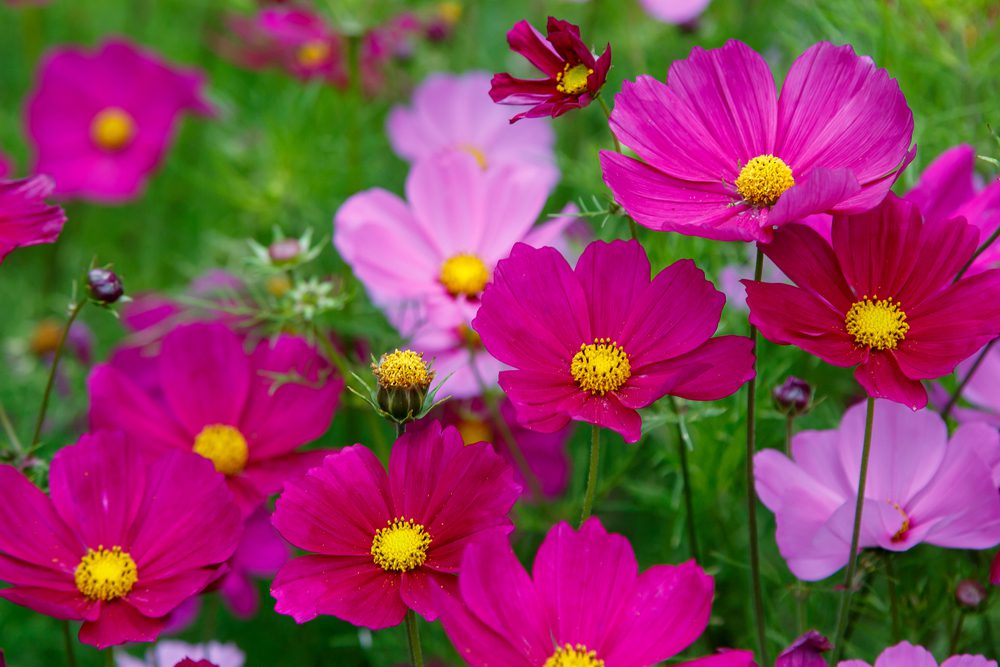
- Cosmos
- Calendula
- Nigella
Ornamental Grasses
Their foliage sways in the wind and catches the light in mesmerizing ways, creating visual interest and taking the load off our flower-heavy eyes.
- Miscanthus
- Feather reed grass
- Fountain grass
Watering and Maintenance Strategy
Your garden maintenance routine changes depending on how closely your plants are growing.
Say goodbye to daily watering:
- Soak deeply but less frequently
- Mulch heavily in the first year of plants
- Deadhead some, but not all
- Top dress perennials with mulch annually
Full borders require less maintenance than a lawn.
Maximalist Frontage After Plants
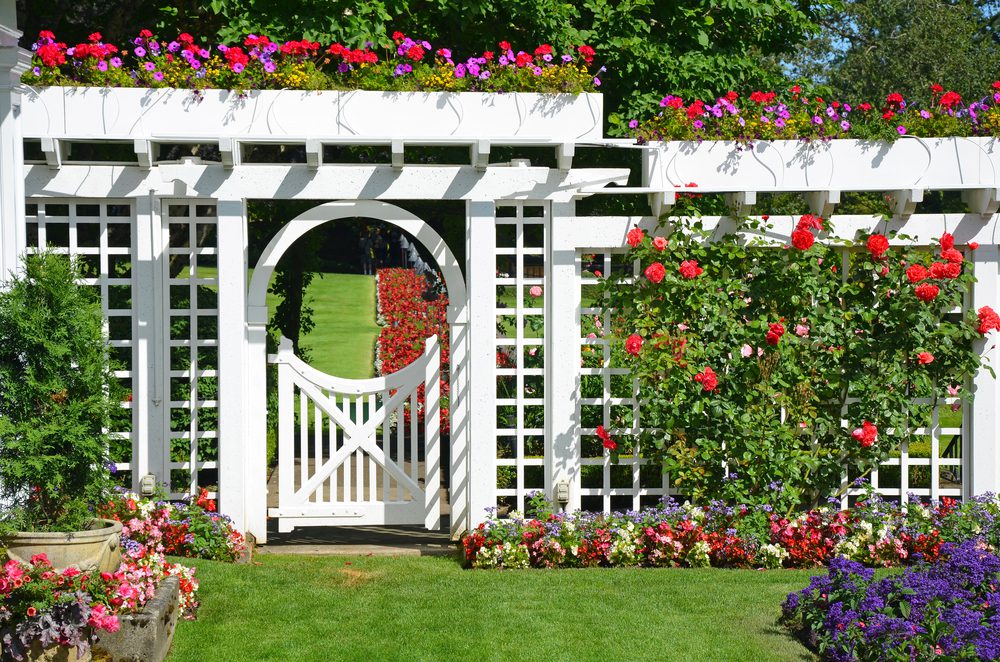
Turn it up with these additions:
- Painted trellis
- Colored ceramic planters
- Vining plants
- Layered lighting
- Arches or obelisks
The idea is overabundance through design.
Common Mistakes People Make in High-Vibe Garden Design
A dense, layered garden should look like the plants naturally and generously spill over their borders.
But there are a few mistakes I made (and see in other gardens) that can quickly turn “lush and abundant” into “insane asylum escapee.”
1. Planting Too Cautiously
This is the biggest mistake I see, and I made it myself in my first few years converting traditional landscaping.
The recommended spacing on plant tags is the amount of room it needs to have air circulation and not be crowded when it’s a full-grown plant. Which is important information.
But if you space your plants exactly as recommended on every tag, you will have noticeable gaps for one or even two full seasons. And those gaps become homes for weeds.
In a high-vibe garden where you want plants to come right up to each other and slightly cover the soil, starting with too much room between makes no sense.
2. Being Overly Varied with Your Colors
A maximalist approach doesn’t mean throw everything you’ve got at it.
Yes, you want a vibrant border that practically pulses with life, but you also want some sense of order to emerge from the riot of colors. When every blossom competes to be the brightest, the overall impression is more jarring than joyful.
Instead:
- Choose just three to five key colors.
- “Ripple” those colors throughout the border.
- Layer foliage plants between color transitions.
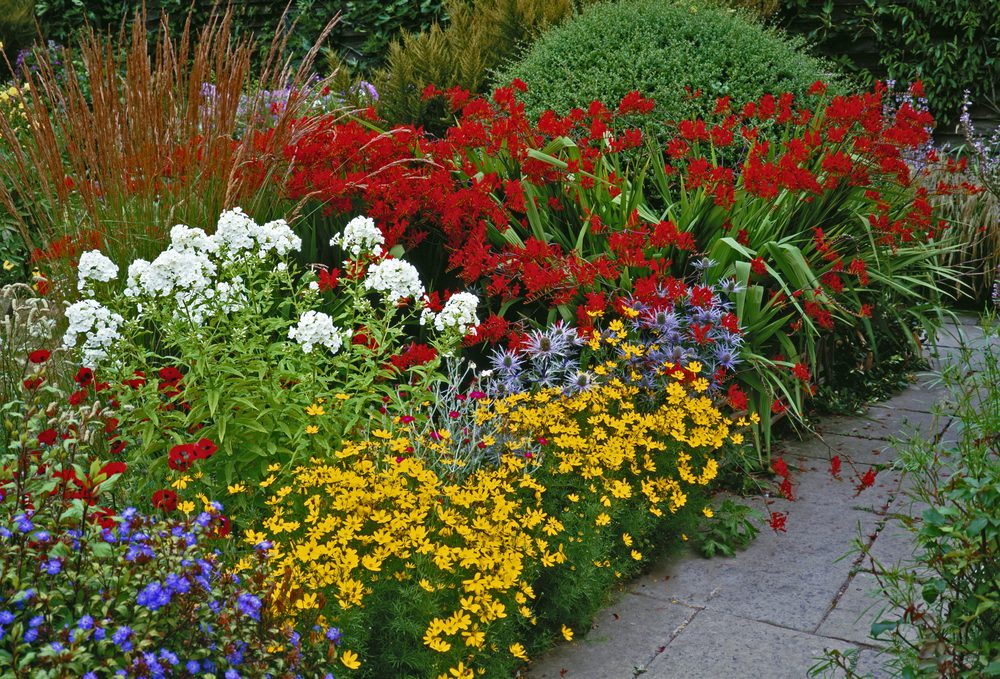
For instance, deep purples, luscious, warm pinks, and crisp, refreshing whites aren’t competing here because their contrast is so perfect that they elevate each other. Soft greens keep the others from overpowering.
3. Forgetting Winter Structure
While gardeners tend to concentrate on summer flowers, when frost rolls in, an entire border can look like it’s falling apart if there isn’t structure.
To prevent this:
- Add ornamental grasses.
- Allow robust seed heads to stand.
- Add evergreen shrubs.
- Add vertical supports such as obelisks or arches.
Adding structure to your low-maintenance garden design means your garden will look like it’s been planned, even in the winter months. A colorful garden needs to have structure even when flowers aren’t in bloom.

4. Forgetting Plant Height Planning
Layering is only effective when height is planned.
When planting the front of the garden with tall plants, they will shade light from shorter plants and cause an imbalance. When planting mid-height plants, the garden will look flat.
Before planting, consider the following:
- Plant the tallest plants in the back (or center of the garden if it’s visible from all sides).
- Plant medium plants to create movement.
- Plant the front with low-growing plants that will help hide edges.
Organize plants in layers. Back, middle, front. Varying height will give depth, and depth will add drama.
5. Excessive Mulching and Negligible Planting
Mulch has a purpose, especially in the first year or so. Yet if you over-mulch and under-plant, you create a scenario where the garden can never live without you.
Large tracts of mulch:
- Catch and spread wind-borne weed seeds.
- Dry out in a flash over the summer.
- Visually, make space.
In a high-vibe garden, plants are the desired feature. Mulch is there as a helper for the young ones. Eventually, their crowding out of the need for mulch is the goal.
Under-planting is largely caused by a crisis in confidence. Everybody is terrified of overcrowding the poor things. Well-planned-overcrowding is the hallmark of success.
Essentially, a high-vibe design works because the plants do most of the work. They shield soil, naturally defeat the weed, and create microclimates that store moisture.
Density is your friend here.
Abundance becomes the maintenance-free solution—not the problem.
Why I’ll Never Go Back to Sparse Planting
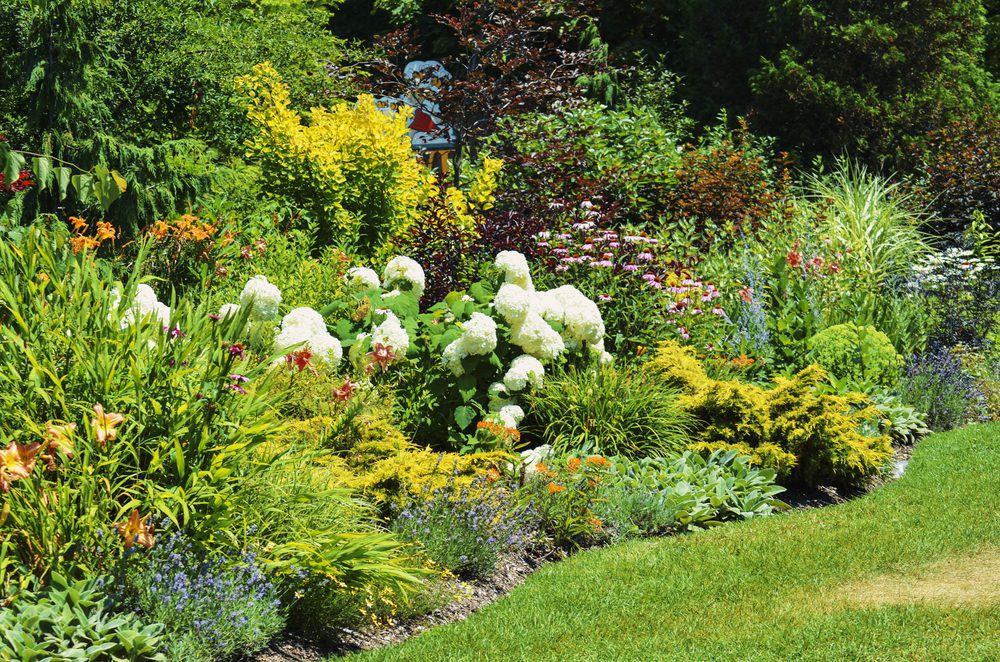
Once I realized just how much better dense, layered planting could be, there was no turning back to minimalist design in my garden. I no longer sought empty space and symmetry. Instead, I sought fullness.
Now, life spills out in all directions. There’s less watering but also fewer weeds, more colors than my lawn and sparse plants ever had.
This garden isn’t sterile. It isn’t static. It changes.
And it’s in the changing that it’s mine.
Why This Design Works Long Term
Nature-inspired high vibrancy garden design mimics nature. Nature’s meadows and cottage gardens work because they:
- Cover the soil
- Compete with weeds
- Grow in layers
- Change with the seasons
By intentionally adding these elements, you can create a garden that looks full and abundant with very little work.