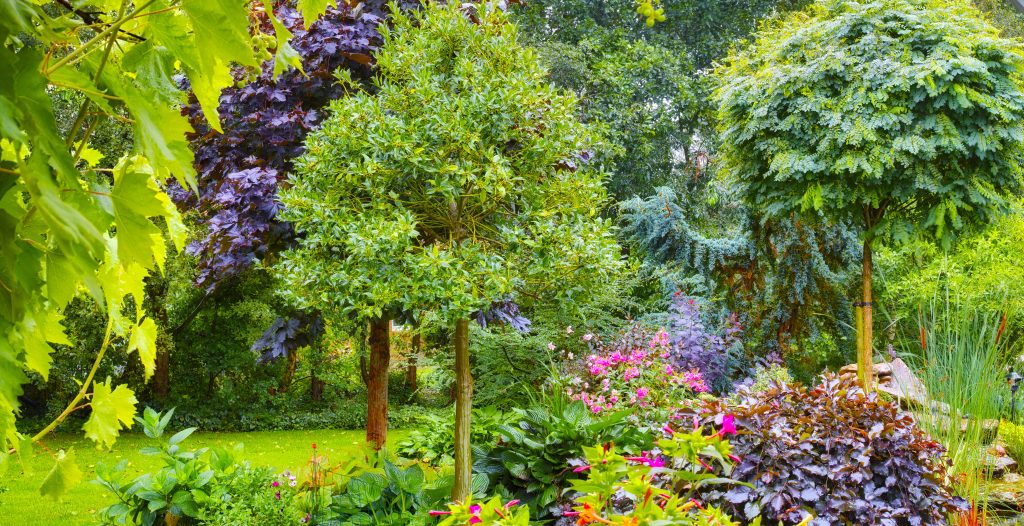
Gardening despair occurs when you plant beautiful shade-loving plants under a tree, hoping for a beautiful eruption of color and life. However, you instead find yourself in a horrifying fight for survival.
For a large part of my gardening journey, I was convinced that the despair was caused by me.
As it turns out, however, the despair was not caused by a lack of gardening skills or my determination to offer the best possible care for my plants.
The despair was caused by the plants that I was growing.
Gardening under a tree? It’s not a hopeless cause. All you need to do is learn to work with the situation instead of against it.
Once you learn how to do that, you can enjoy a variety of stunningly beautiful shade-loving plants under the tree. Here’s how you can do that.
Why Is Plant Growth Stunted Under Trees
Understanding the problems likely to cause stunted growth for plants growing under trees may help you make the right choices.
Apart from limited resources like water, nutrients, and light, plants growing under trees are likely to face stunted growth due to the following:
- Less Light – Trees block the light.
- Competition for Roots – The tree takes up most of the water and nutrients available, which would normally promote growth in plants.
- Dry Conditions – Trees intercept rain, hence dry conditions.
- Tree Roots – The tree’s roots are vast and highly clustered at the soil surface. Plus, the roots of a tree may become intermeshed, making it difficult to dig.
I’ve been in a local park under trees and, on that day, it had rained the night before. Despite the heavy rain, the ground was dry. Many people assume that if there’s shade, there’s also moisture; trees intercept rain, though.
It is therefore very important to choose plants to grow, especially plants under trees that can grow well under low light, dry, nutrient-poor conditions.
What Qualities Should a Plant Possess to Thrive in the Shade?

Shade-tolerant plants vary greatly from one plant to another. Some can tolerate shade but will thrive when exposed to the sun.
Others will flourish when grown in shady conditions. These are the ones you want when planting under trees.
The best shade lovers:
- Thrive in woodland conditions
- Have shallow roots to avoid competition with tree roots
- Will be drought-resistant once established
- Will have foliage as well as flowers
- Propagates by rhizomes or slowly over time
Will benefit from dense planting. The more plants you can squeeze into a spot, the less space there is for weeds to grow, the quicker it will fill in, and the more shade the plants will produce together.
Here are 15 Shade-Loving Plants That Are Perfect Under Trees:
1. Hosta
Hostas are a perennial favorite for shade gardens.
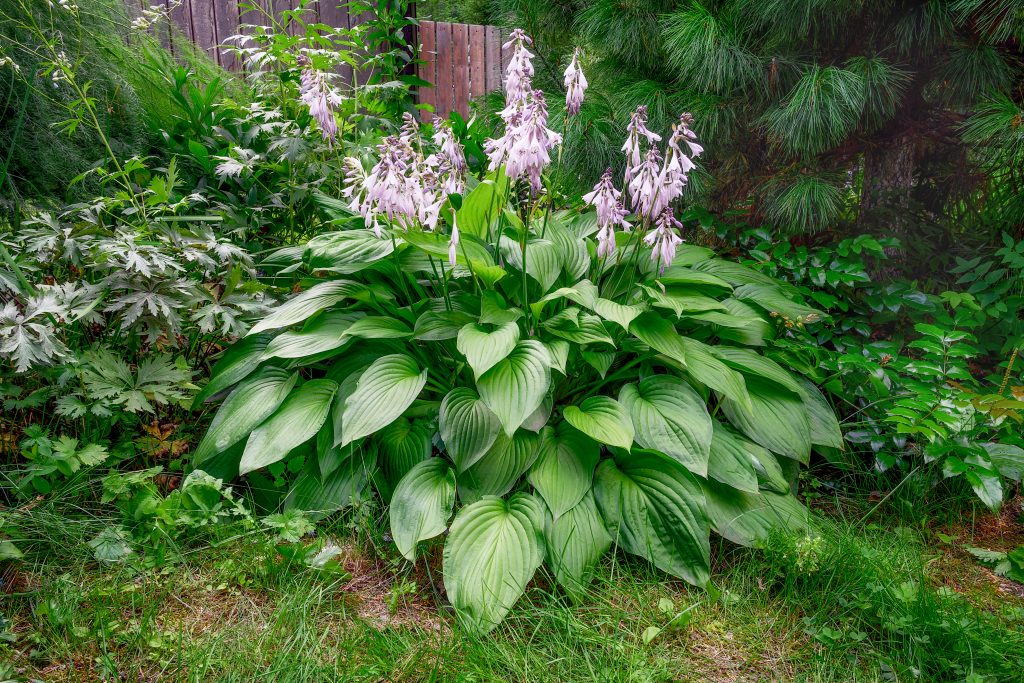
These low-maintenance plants come in a variety of shapes and sizes. You can opt for solid green leaves, or add some texture to your garden with a variegated variety.
White or purple flowers shoot up in the air in late summer.
Blooms: Late summer
2. Heuchera (Coral Bells)
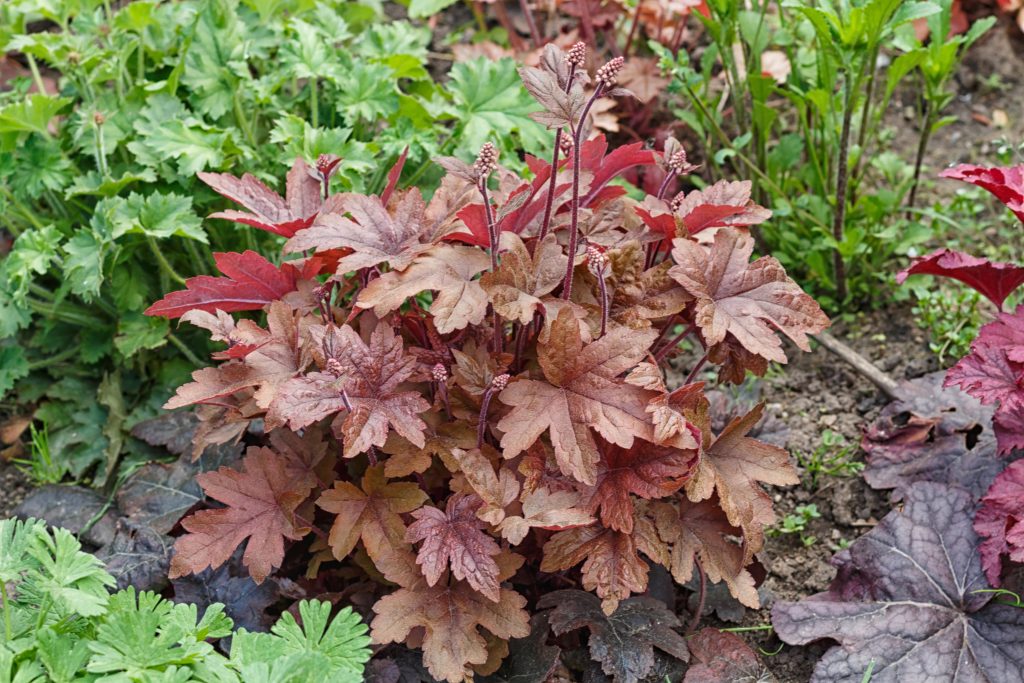
Who needs flowers when you have foliage this stunning? Heuchera’s maple-like leaves form mounds in a rainbow of colors, from chartreuse to deep purple to almost black.
Heuchera is a low-growing perennial that tolerates dry shade better than most, so it’s perfect for using as edging in the shade of trees.
Best in filtered shade; tolerates drought.
3. Ferns
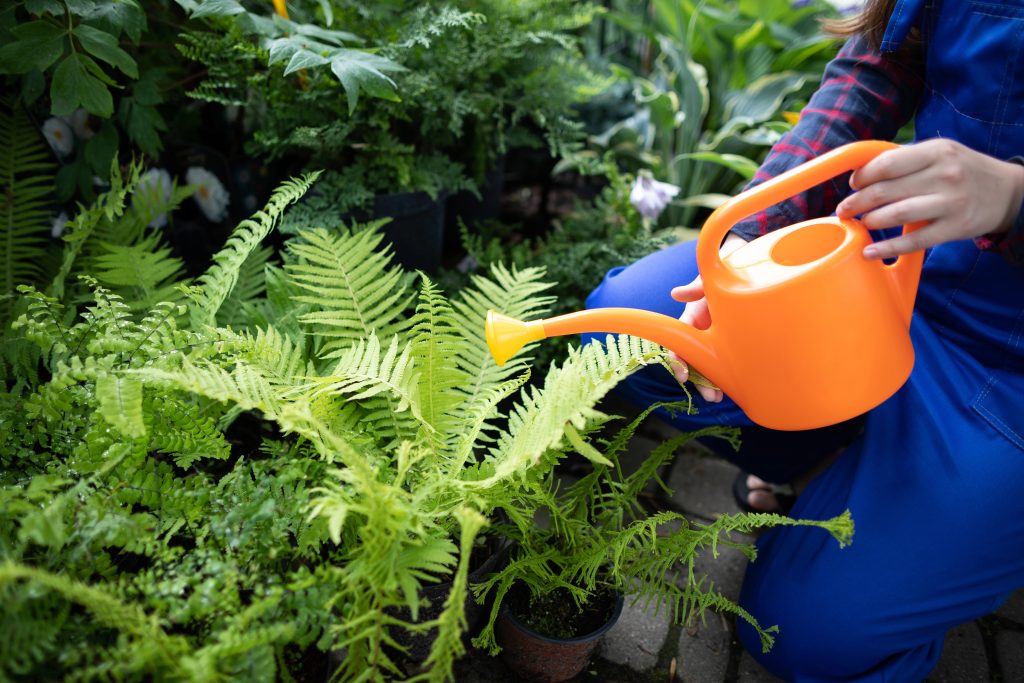
The graceful, arching fronds of ferns add a lovely, feathery texture to the garden. Japanese painted fern (pictured) and lady fern are two especially reliable varieties.
Ferns love shade and moisture and will spread over time to form a lush, swaying ground cover. They’re also ideal for adding a natural woodland vibe to your garden.
Best in deep shade with consistently moist soil.
4. Astilbe
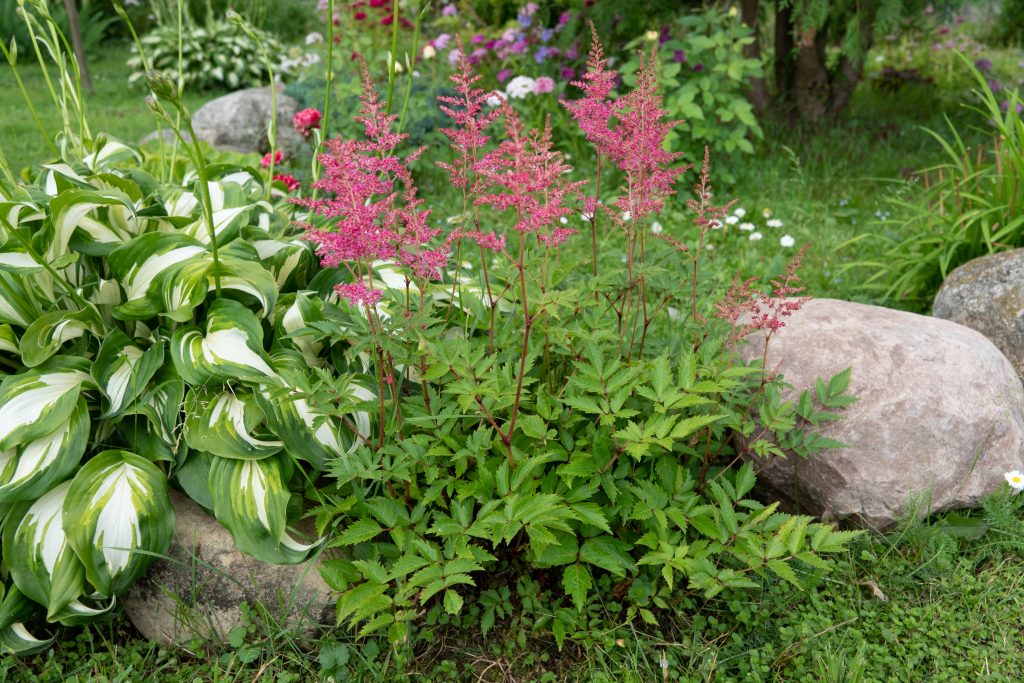
If you’re after blooms in the shade, you’ve got them.
Astilbe’s feathery plumes in shades of pink, red, and white rise above fernlike foliage. They like their soil a bit damp, so they thrive on the outskirts of a tree’s drip line, rather than directly underneath.
Best for: Part shade with consistent moisture.
5. Hellebores
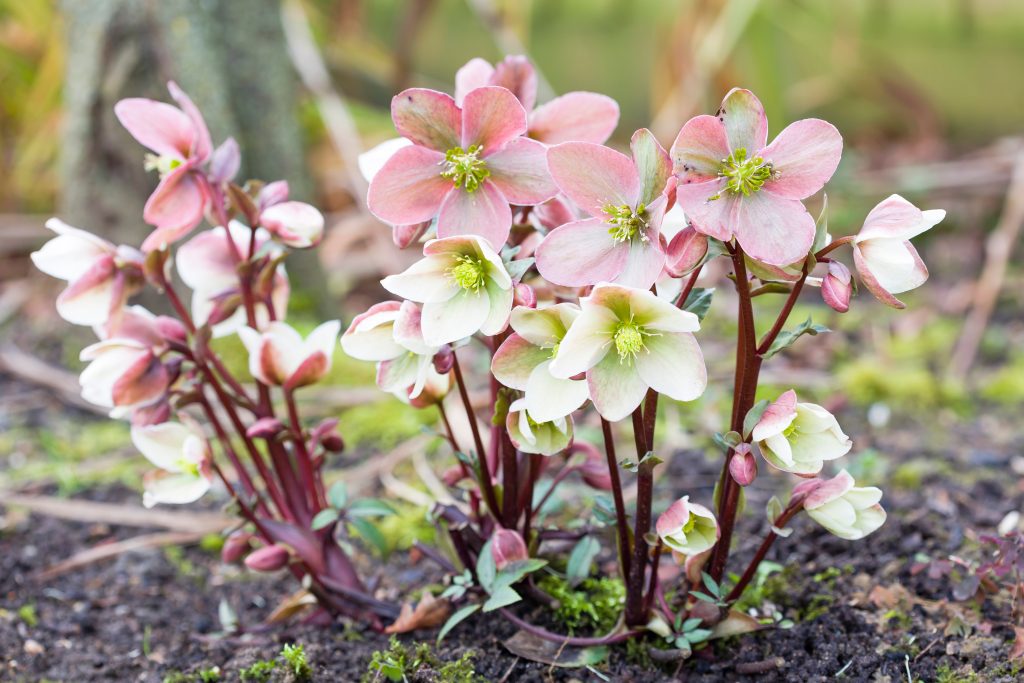
One of my all-time favorites.
Hellebores bloom in late winter or early spring, at a time when much of the garden is still in its slumber. Their leathery, evergreen leaves look great year-round.
Once hellebores are established, they can tolerate dry shade, making them a perfect fit beneath deciduous trees.
Best for: Dry shade and early to midseason bloom.
6. Lamium (Dead Nettle)
This ground cover grows low to the ground, spreads fast, and produces mats of silvery-speckled leaves and small pink or purple flowers.
It thrives in dry shade and can outcompete many weeds.
Best for: Sturdy root competition in thick mats of ground cover.
7. Pulmonaria (Lungwort)
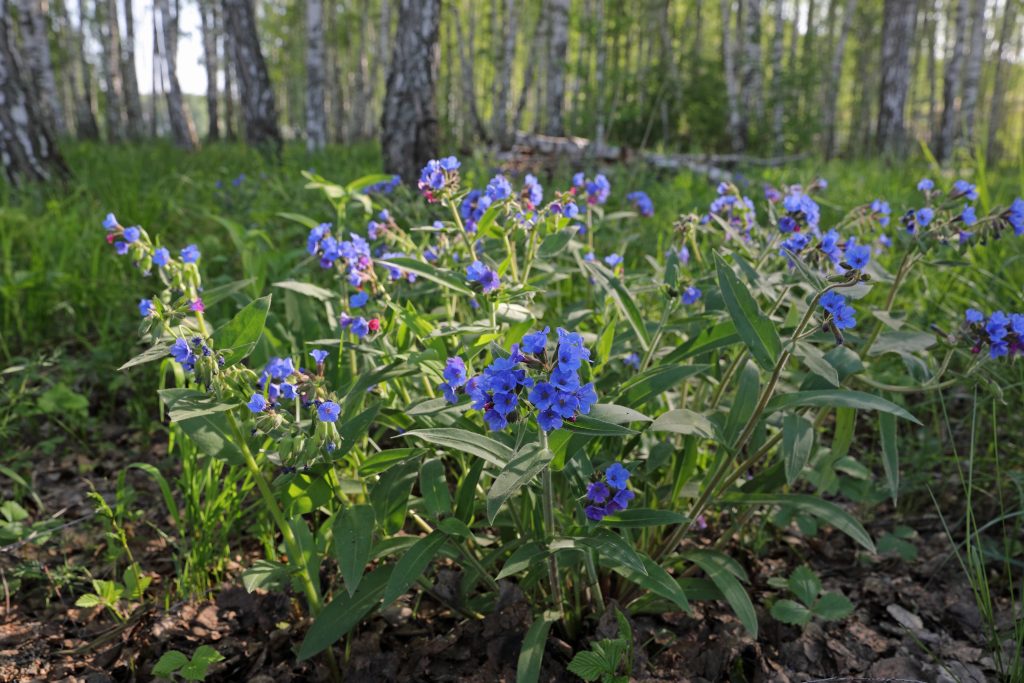
Striking speckled leaves pave the way for lovely pink to blue flowers in early spring.
This ground cover loves deep shade and doesn’t mind tree roots growing nearby.
Best for: Early blooming in the shade.
8. Tiarella (Foamflower)
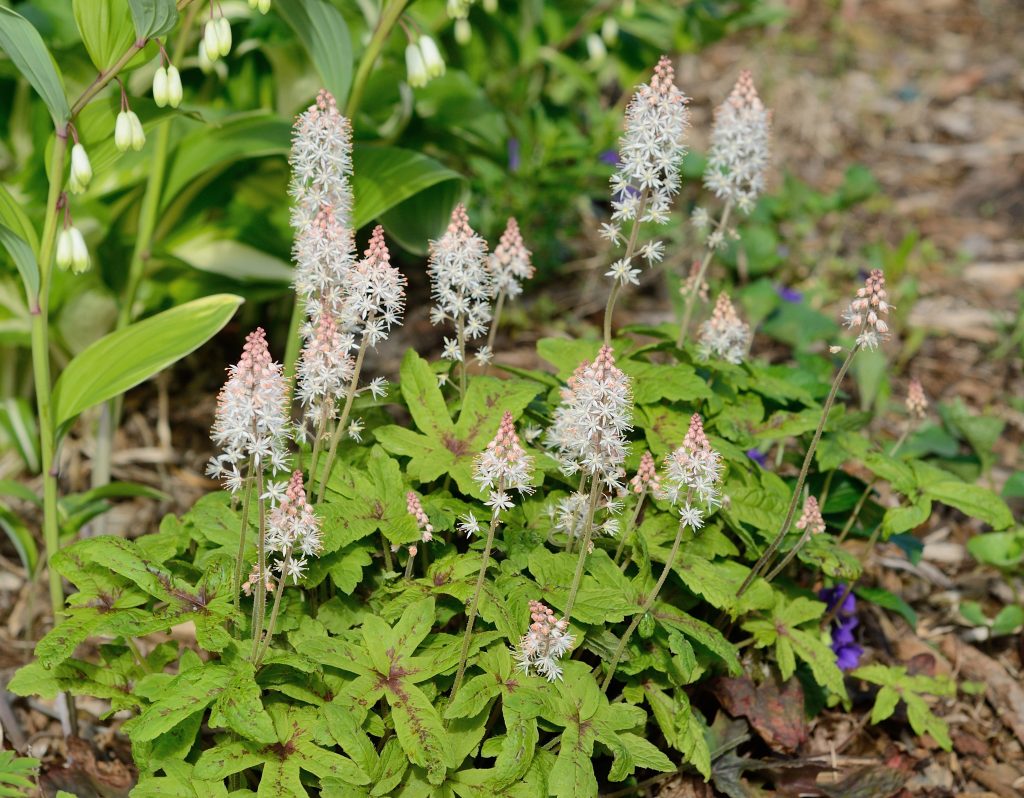
This slow-spreading ground cover forms beautiful clumps of leaves and white spires of small flowers.
It’s good for the edges of a border bed.
Best for: Filling in between perennials.
9. Brunnera
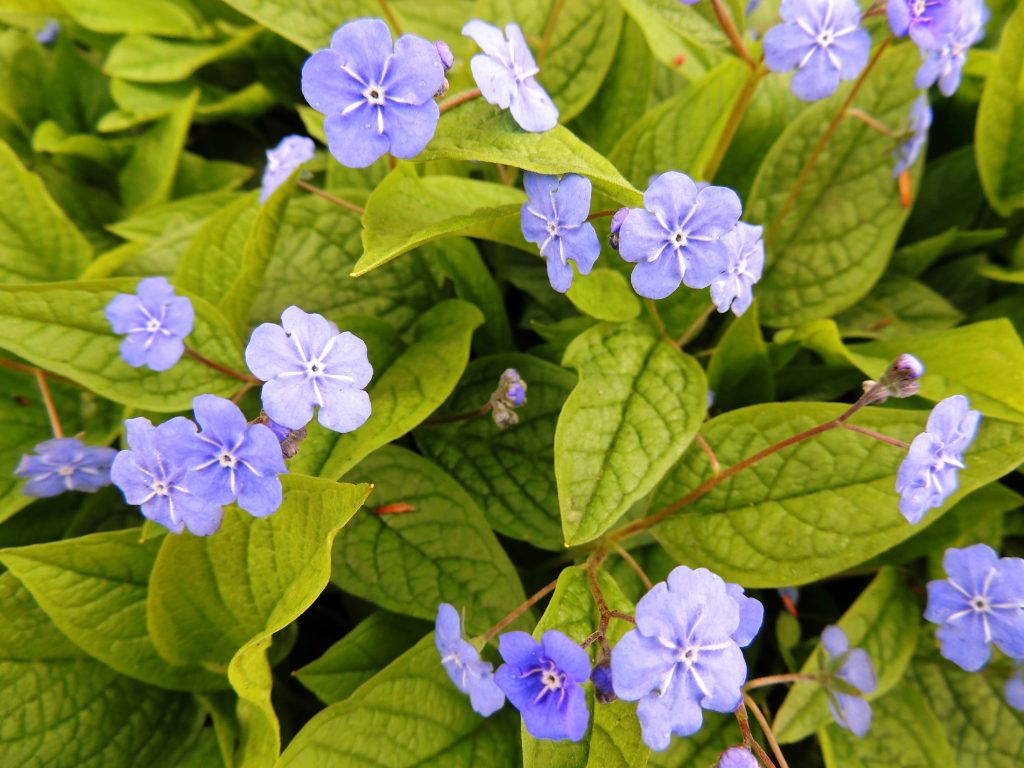
With its heart-shaped leaves and small, bright blue flowers, brunnera makes a strong visual impact.
The variegated versions will light up the darkest corners of your yard beneath trees.
Best for: Brightening deep shade.
10. Japanese Forest Grass (Hakonechloa)
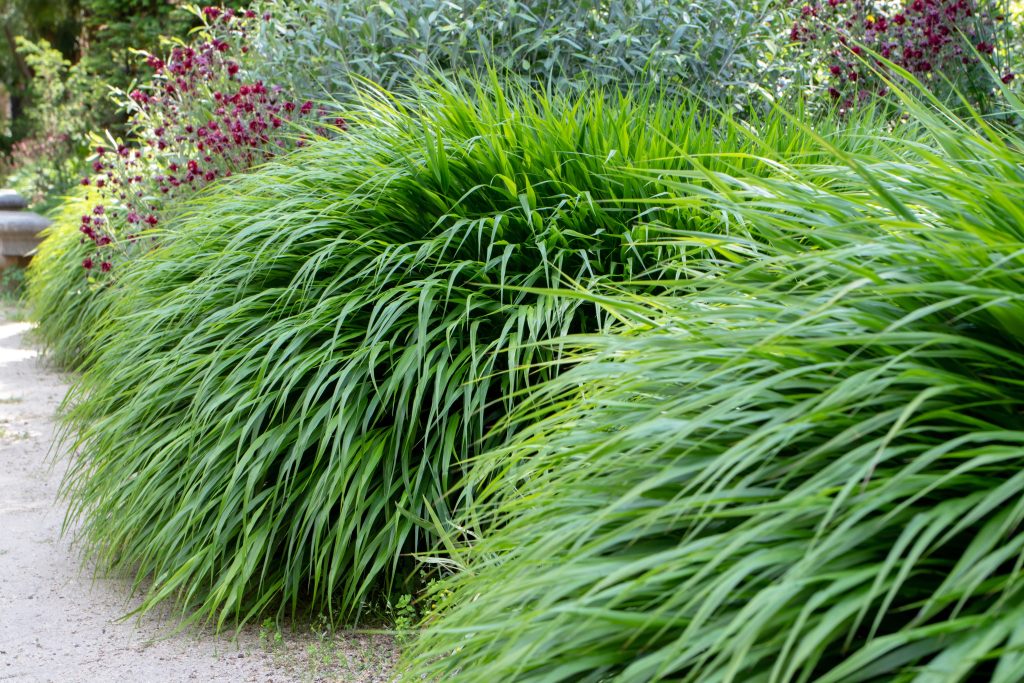
Ornamental grass isn’t only for the sun.
Japanese forest grass spills gracefully over the ground and adds beautiful, flowing lines to any shade garden. The golden varieties will even light up the darkest of corners.
Best for: Partial shade.
11. Bergenia
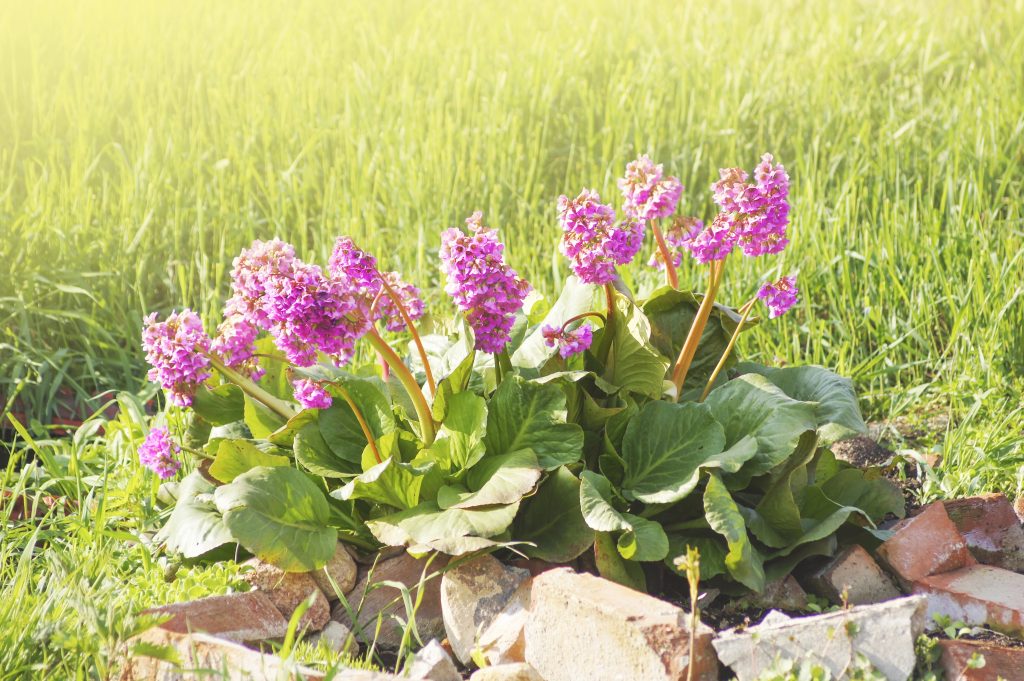
Thick, waxy leaves and pink blooms in the spring make Bergenia a great structural plant in the shaded garden. This plant can handle dry soil once it’s established and does well with root competition.
Best for: Tough, dry spots.
12. Epimedium (Barrenwort)
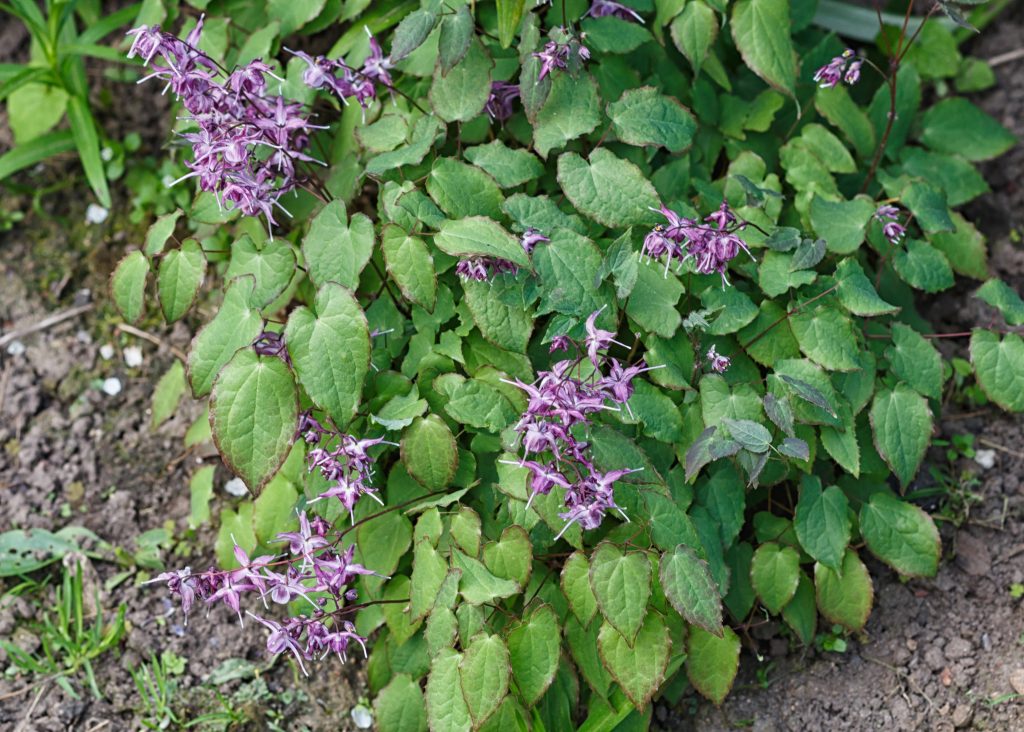
This plant is really tough.
It thrives in dry shade and slowly spreads to form a tough groundcover. Dainty flowers in spring, but it’s the elegant leaves that will impress you.
Best for: Deep, dry shade.
13. Ajuga (Bugleweed)
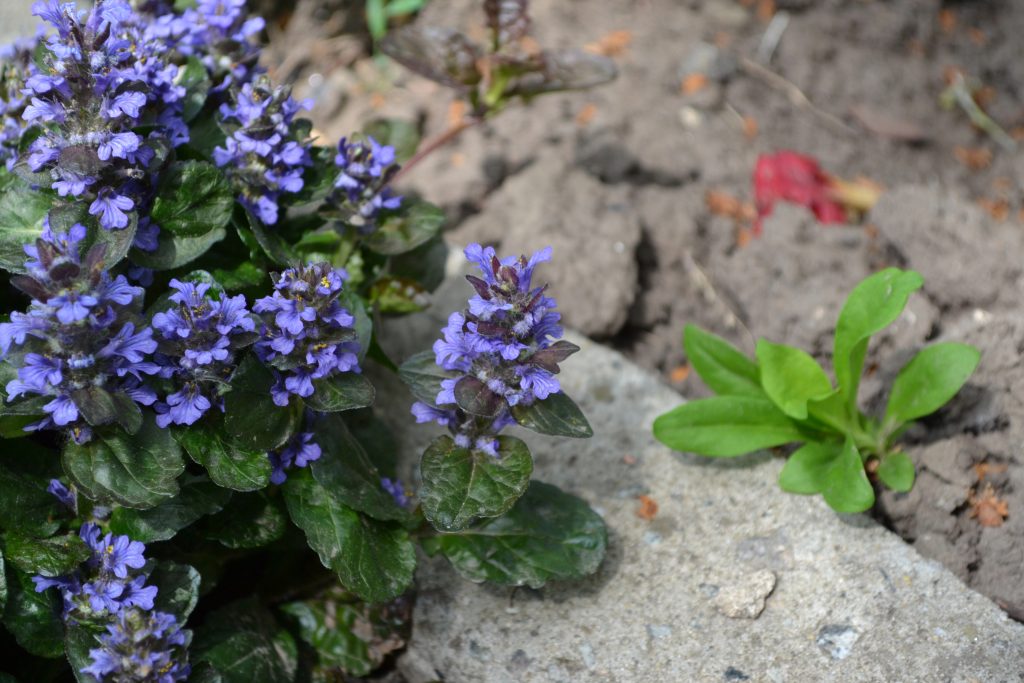
This plant makes dense ground-hugging mats in shades of green, bronze, or purple.
Short spikes of flowers appear in spring, and this plant will grow just about anywhere, even in poor soil.
Best for: Quickly covering the ground.
14. Bleeding Heart (Dicentra)
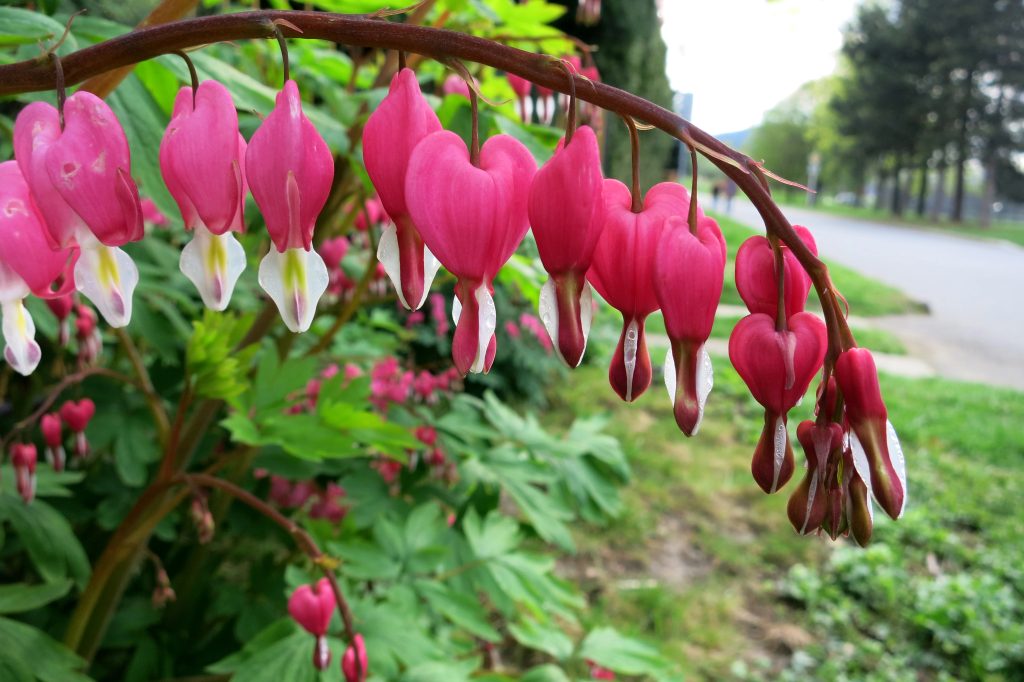
A beautiful plant with arching stems of pendant heart-shaped blooms in spring.
It prefers consistently moist soil, but it will still thrive at the foot of trees where the soil is slightly drier.
Best for: Adding romance to your woodland garden.
15. Sweet Woodruff
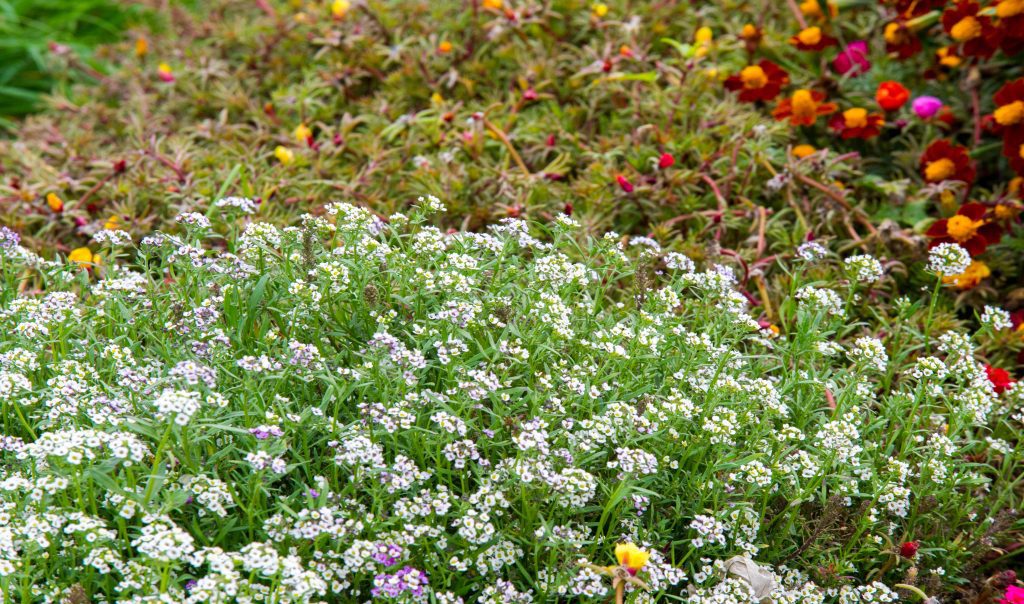
A dainty groundcover with leaves that grow in whorls around the stem and small white flowers.
It spreads slowly but steadily and is perfect for helping to fill in gaps in a large planting of shade plants.
Best for: covering over bare soil.
How to Plan a Luxuriant Shady Flower Bed Under Trees
Design is important after you’ve made your plant selections. Instead of giving new plants a lot of space to fill in, put them in tighter than you would in a full-sun bed. Layered and dense shade gardens are the most eye-catching.
Plant in tiers:
- Tall anchors: hostas, ferns, astilbe
- Mid-level residents: heuchera, brunnera, hellebores
- Groundcovers: lamium, ajuga, sweet woodruff
You absolutely want high density here. An abundance of plants will block out the sun (and thus the weeds). Plus, soil will retain moisture better when it’s shielded from the sun.
One of my earliest mistakes was spacing my plants too far apart. I didn’t want to overcrowd them, so I’d given them plenty of space to grow.
But the result was more bare soil than plants (which meant more room for weeds) and a gangly, awkward-looking garden. When I started plugging the gaps, my workload decreased, and my garden started looking amazing.
Tips for Gardening Under Trees that Work
1. Plant the Right Plants
Choose small plants that can get a foothold under trees and develop a low root structure.
By using gradually enriching soils, even shallower-rooted plants will be able to take hold.
2. Go for Low Maintenance
Once established, the plants should not need significant work and should become hardy and self-sufficient after the first season.
3. Use Shade Tolerant Plants
Choose plants that will thrive in the low light under trees, and do not expect to grow sun-loving plants in this environment.
4. Plan for Water Needs
Even drought-resistant plants will need excess watering at first to establish themselves, so they will continue to need some irrigation.
Common Mistakes to Avoid When Designing a Shade Garden:
1. Planting Too Sparingly
The wider the berth between plants, the more room there is for weeds (and for the sun to reach the soil, drying it out).
2. Indiscriminate Use of Unrelated Colors
There’s a dreamy softness to a cohesive color scheme, like various greens melded with purples, whites, and soft pinks.
3. Ignoring the Off-Season
Evergreens or semi-evergreens like hellebores, heuchera, and bergenia create drama from November right through to April.
4. Not Planning for Drama
Aim for 6 feet to 8 feet at maturity for at least a few of your stunners; under 3 feet is also necessary, as a hydrangea can look frumpy blocking the kitchen window.
5. Over-Mulching and Underplanting
Plants can create a mulch by themselves. It’s called full coverage.
A Personal Story About My Garden
In my garden, there is a huge maple tree that I used to fight with. Nothing was thriving under that tree. I would plant some beautiful sun-loving flowers, and I would be so disappointed.
So, I finally gave up the fight, so to speak, and tried to work with the shade.
I planted hellebores, ferns, and heuchera close to one another. The first year was touch-and-go. The second year, they kinda remembered each other.
By the third, those plants had tossed their hat into the ring, and the spot that was once naked started looking purposeful and peaceful.
The most surprising thing wasn’t the flowers. It was how little work it was to maintain; fewer weeds to pull, less watering to do, and fewer plants that sadly failed to thrive.
Sometimes, spaces can be easier to maintain if we do not fight so hard for full sun.
Creating a Woodland Feel That’s Intentional
Planting under trees can look charming rather than haphazard with a few tricks:
- Incorporate curved edges for the bed
- Use natural stone or non-obtrusive edging
- Use groupings of plants
- Add a soft edging of grass between the lawn and the shade bed
It doesn’t have to be perfect. It just has to work.
Allow things to spill over. Play off different textures. It’s all about subtlety for a shade garden.
Final Thoughts
Tired of trying to grow anything under trees? So was I.
But if you can give some shade-loving plants the right conditions and a year or two for their roots to grow in, you might find that the areas of the garden you’ve pretty much given up on have become the most rewarding part of the garden instead.
Rather than fighting against the limitations of shade, let its beauty work for you.