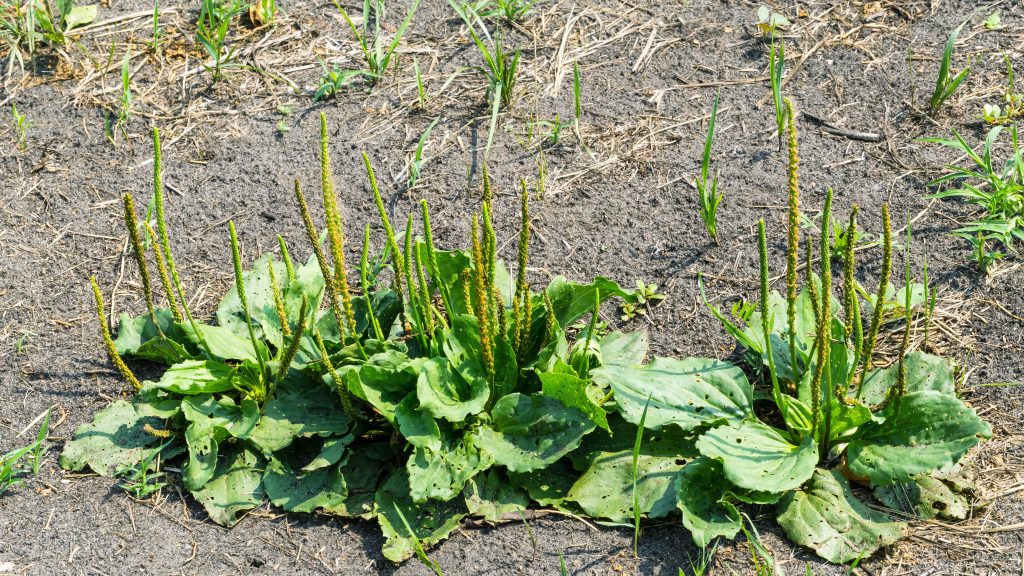
If you’d like to tap into a readily available spring edible and one of the most underappreciated wild plants in your yard this season, consider broadleaf plantain (Plantago major).
A common, perennial lawn “weed” with a long history of use as food and medicine, plantain is a highly nutritious and abundant plant that probably grows right outside your front door.
I can bet that if you walk over your lawn and look down, you’ll see the familiar rosette shape that this plant grows in. What you may not see are the delicious, nutritious, and underused flowering shoots.
The flowering stage of plantain is known to be a bit fibrous and tough. As the plant grows into a tall spindly shoot with a tassel of flower buds, the outer husks become unpalatably coarse and stringy.
Anatomically, it kinda makes sense: the plant is sending all of its energy into the stem at that point, and the outer casing on the buds becomes a protective sheath for the tender flowers inside.
Typically, those in the know harvest their flowering shoots young.
What Is Broadleaf Plantain?

Broadleaf plantain, or Plantago major, is a perennial herb that one can find almost anywhere in the world. It grows well in lawns, on paths, and in gardens, which is why it’s often referred to as a weed.
The plant has several broad, oval-shaped leaves that grow close to the ground, forming a rosette. Out of the center of the plant, thin stalks of flowers grow up from the ground, holding small clusters of greenish-colored flowers.
These stalks of flowers, also called flowering shoots or seed spikes, are the part of the plant that’s often picked for food.
The plant has nutrients, including vitamins A, C, and K, and minerals like calcium and iron, which are all found in the leaves.
Because of its high nutritional value and its long history of usage in herbal remedies, the broadleaf plantain has gained a reputation for being one of the most useful “backyard plants” out there.
Why the Flowering Shoots Are So Popular

Though the leaves of the plantain plant can be consumed, the flowering shoots of the plantain plant have been cited as the most sought-after because of their taste and texture.
For instance, the young and tender shoots have a mild nutty taste, and their texture has been likened to eating asparagus.
Additionally, they have a short cooking time and can be easily added to meals.
Below are a number of reasons why the flowering shoots of the plantain plant have been cited as the most sought-after:
1. Unique Taste
They are a great choice for savory meals as their taste is mild and earthy. Light sautéing brings out a mild, nutty taste among them.
Some fans also describe the taste as resembling young asparagus, green beans, or fiddlehead ferns. The overall flavor is simply that of slightly nutty wild greens.
Since shoots have a mild flavor, they easily take up the taste of garlic, olive oil, butter, etc.
2. Easy to Forage
The shoots are favored simply because they are easy to gather. Unlike other forage-to-table foods that require you to pull up roots or strip leaves, plantain shoots merely need to be clipped at the base to be harvested.
The shoots are numerous and grow close together; many foragers simply use scissors to cut what they need.
3. Tender When Young
Enjoying plantain shoots means you have to harvest them nice and early in their development.
Young shoots, like many other wild edibles, are some of the most delightful to eat.
Whereas older shoots get tough, fibrous, and inedible. So, too, the seeds develop and use the shoot to fuel maturity.
4. Nutritious
As we already know, plantain has quite a bit to offer in the nutrition department. Shoots are no different, providing;
- Vitamins A, C, and K
- Calcium & Magnesium
- Iron
- Plant Fibres
- Natural Antioxidants
The plant also contains mucilage, which is an excellent gel-like plant substance that has a wide range of benefits, including being soothing as well as supportive of the digestive and gut systems.
A Plant of Many Talents

Broadleaf plantain has been used for ages in various food and herbal treatments.
Many ancient societies recognized the plant as a powerful medicinal herb. They would often use crushed leaves on cuts, insect bites, and minor injuries to alleviate swelling and itchiness.
The leaves also made for a nutritious herbal tea that was sometimes used to improve both digestive and respiratory health. The leaves and shoots were also often gathered for seasonal eating.
Since plantain can grow virtually anywhere with little to no care, it has become a vital wild green in many locales. Foragers and gardeners are today still slowly starting to revisit it as a potential culinary gem.
How to Recognize Broadleaf Plantain

To harvest plantain shoots, first identify them.
The good news is that it’s easy to identify broadleaf plantain. Look for these traits:
- Leaves
- Broad oval leaves
- Smooth leaf margins
- Prominent parallel leaf veins that run from the base to the tip of the leaf
- Growth habit
- Leaves form a rosette and grow low to the ground
- Flower/spike
- Slender, tall, green to brown flower spikes that rise vertically from the central part of the rosette
- Tiny green to brown flowers on the spike
The spike will eventually form seeds, which are a food source for birds and other wildlife.
When to Harvest the Flowering Shoots
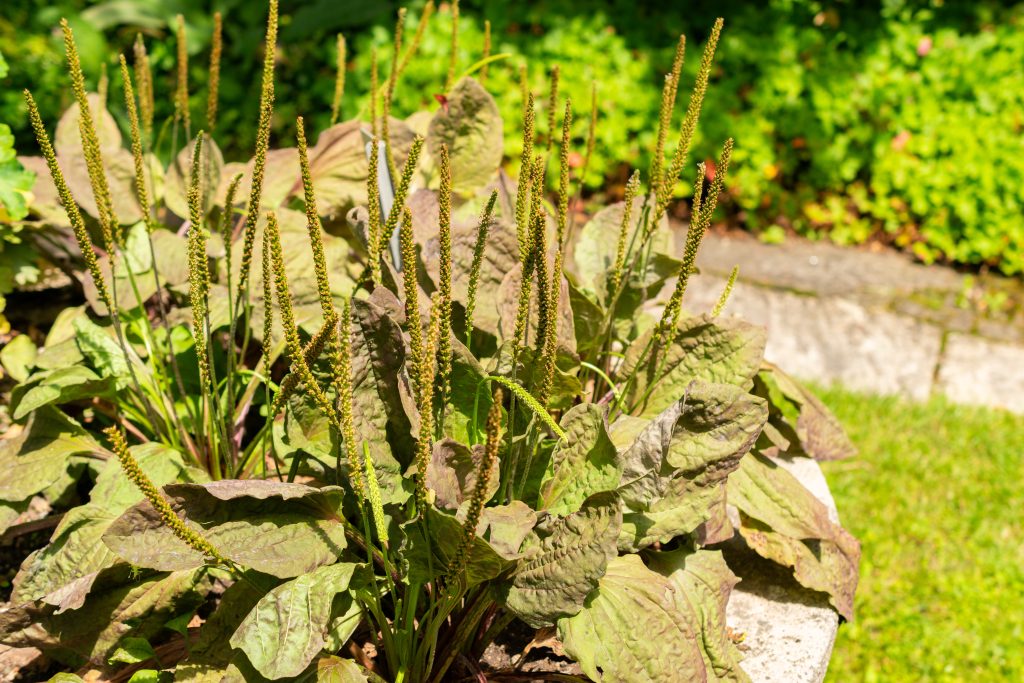
Timing is an essential element when it comes to the harvesting of the plantain shoots.
The best shoots are:
- Young
- Green
- Flexible
- Less than 4 inches tall
As the shoots age, they can become fibrous. Although they can still be eaten, it is often necessary to peel them or cook them for longer than usual.
Many foragers like to check their patches during the growing season to harvest the shoots when they are tender.
There can be multiple flushes of shoots from the plantain during the year, especially after harvesting the previous flushes.
How to Harvest Plantain Shoots
Harvesting is easy. No special tools are required.
Find a healthy patch of broadleaf plantain.
Find the young flower spikes.
Cut the flower spikes at the base with scissors or pinch them off with your fingers.
Collect the flower spikes in a container or basket.
Always harvest in an environmentally responsible way by leaving enough for them to continue growing and producing seeds.
In addition, avoid picking from an area that is near the road or could have chemicals sprayed on it.
Easy Steps to Cook Plantain Flower Shoots
After harvesting, you can cook the plantain flower shoots with the following easy steps:
Fast Sautéing
Sautéing the plantain flower shoots is one of the easiest ways of eating them.
Take a pan, add some oil or butter, add the plantain flower shoots, and sauté them until they turn light brown.
Add salt or herbs of your choice.
In this method, the nutty taste of the plantain flower shoots is pronounced.
Stir Frying
You can simply stir-fry the plantain flower shoots with a few veggies.
Just add some mushrooms, onions, peppers, or zucchini along with the plantain flower shoots.
Stir-fry on a medium flame and add a few drops of soy sauce or lemon juice.
Omelets and Scrambles
The shoots can be chopped and added to scrambled eggs or omelets.
The shoots have a bland flavor that can be mixed well with eggs and cheese.
Soup Garnish
Another possible use of the shoots could be to add them to soups or broths.
The shoots can be quickly cooked and can be used as a garnish to soups or broths, offering a different texture, almost like greens.
Why Many Gardeners Are Reconsidering This “Weed”

Gardeners have traditionally seen plantain as a pest in their lawns.
However, people’s perceptions of plantain are slowly changing.
More and more gardeners are discovering that plantain is a great plant for a sustainable garden.
And plantain is the quintessential example of such a plant.
Plantain is:
- edible
- medicinal
- plentiful
- tough
- easy to collect
Rather than trying to eradicate plantain, some gardeners are now choosing to let small patches of it grow.
In fact, such “weeds” can even be beneficial in a cottage-style garden, where biodiversity is encouraged.
Safety Precautions for Foraging Plantain

Before eating any wild plants, there are some safety precautions that should be observed in general.
First, make sure that you are able to identify the plant.
In case you are not sure, you should refer to a field guide or, better still, forage with someone experienced in the field.
Avoid plants from polluted environments.
Avoid foraging from roadsides, industrial estates, or lawns that are sprayed with chemicals.
Taste a piece first.
Different plants may cause adverse reactions in different people.
Wash the plant well.
Scrub the leaves well before use.
A Fresh Perspective on Your Garden

Perhaps the somewhat engaging plants are those we dismiss.
Broadleaf plantain probably won’t have conspicuous sprouts or sensational foliage, yet it offers something that numerous nursery plants don’t: handiness.
Its leaves alleviate bug nibbles, its seeds support assimilation, and its blossoming shoots can turn into a shockingly delicious addition to suppers.
What numerous individuals call a weed can really be a significant wild food growing right under their feet.
Figuring out how to perceive and utilize plants like this can extend your association with the nursery and the common world around it.
Rather than seeing plantain, for example, to eliminate, you may start to see it for what it’s worth, however significant a piece of a living scene.
In Summary
The flower stalks of the broadleaf plantain are a great example of how, in nature, things are hidden in plain sight.
To be honest with you, if you harvest it properly, it tastes extremely delicious and healthy, making it one of the favorite foods for people who like to forage and consume wild vegetables.
Regardless of whether you choose to fry it in a pan or a wok, you have the opportunity to try out wild-growing edible crops.
The next time you see one of these broadleaf plantains in your yard or garden, take a good look at it.
This plant tastes much better and has many more benefits than you would have thought!