
Growing watermelons in your home garden will seem nothing less than a magical experience. Some of the juiciest and sweetest watermelons in your home garden space are a treat that every gardener can avail of.
One does not need a farm or acres of open space to grow watermelons at home. There are several ways one can do so. Herein, we will walk you through two simple ways of growing watermelons at home garden:
- Planting watermelons in the ground
- Planting watermelons in a container
No matter what type of garden area you own, you will be able to grow watermelon at home.
I Attempted to Grow Watermelons at Home Without Knowing Anything
To start with, I knew very little about melons. It’s easy to just assume that your location’s climate is ideal for any given crop. This is not true with watermelon.
I am fortunate to live in a warm climate where vines grow great, but the melons weren’t reaching their full potential.
Not being winged glyphosate-spraying seed neo-nicotinoid-using farmers, I decided, “Well, let’s see if we can grow melons on the south side of the house and some in the backyard.”
It was a great idea in theory; we had loads of room. We had fences and trellises to grow vertically. It would be so much fun, right? You can probably guess where this is going.
What are the Benefits of Growing Watermelon at Home?

There are several benefits associated with growing watermelon at home.
First, it tastes sweeter than the store-bought type. Second, it is also chemical-free.
Third, it is a fun experience for the kids and the adults. It could be a fun experience that embodies the spirit of summer in your garden.
It will also act as a pollinator. Its dramatic foliage will provide structure to your garden. It will also act as a decorative element in your kitchen.
Lastly, when you grow your own, you get to choose the variety, the flavor, and when it is harvested.
Choose a Watermelon Variety
Watermelon is a warm-season crop and, as a result, should be grown when the soil temperatures are 70 degrees or above.
The growing season should be long and free of frost, and the plant should receive a minimum of 8 hours of sunlight daily.
Additionally, the soil should be well-draining and heat up quickly. Selecting the appropriate variety is also important for managing space and dealing with shorter growing seasons.
First Method: How to Properly Plant Watermelon in the Ground
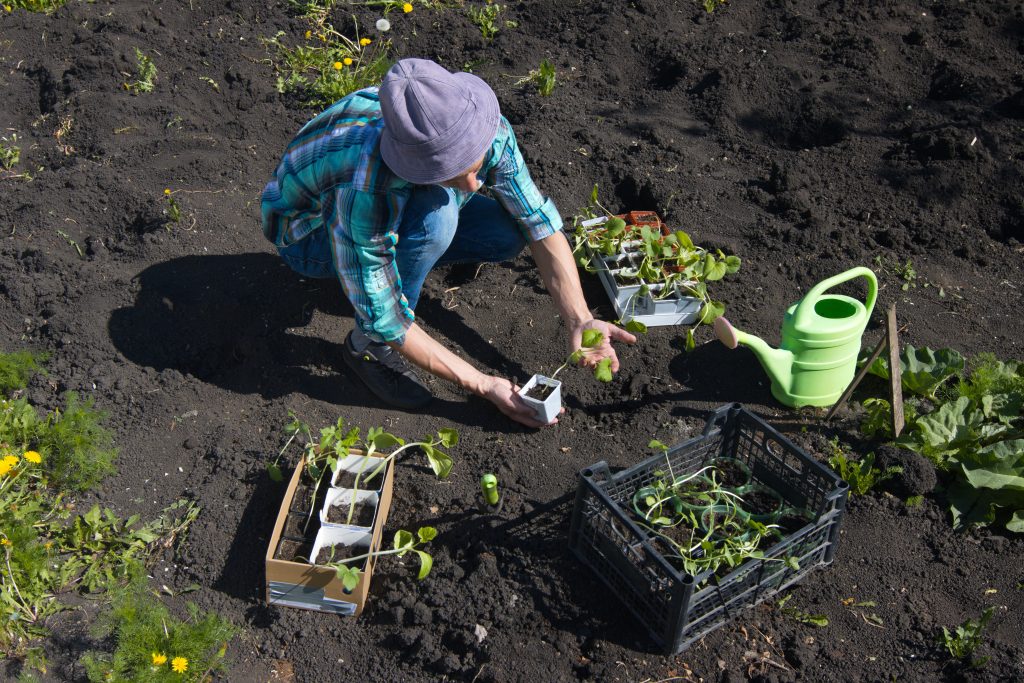
Watermelon vines are expansive plants that require a lot of space, but as long as you’ve got 6 to 8 feet of growing space in a sunny location, you can plant watermelon directly into the ground of a vegetable or in-ground garden bed.
Here’s how to plant watermelon in the ground:
1. Choose the Right Variety
Select a great watermelon variety to plant in the ground. Some popular options include Crimson Sweet, Sugar Baby (ideal for cooler regions), Jubilee, and the SpaceSaver variety if your garden has limited space.
Plant watermelon seeds or transplants directly in the ground after all danger of frost has passed and the soil temperature is at least 70°F.
Watermelon seedlings should be spaced 12 inches apart, and rows should be about 6 to 10 feet apart (depending on the watermelon variety). If you are planting watermelon seeds, plant 6 or 7 seeds in a small hill and space your hills about 6 to 8 feet apart.
Plant seeds 1 inch deep and transplant seedlings at the same depth as grown in their containers.
2. Prepare the Soil
Water the soil and keep the base of the plant moist during germination. Once seeds are sown or transplants are in the ground, let the soil dry out a bit in between watering to keep roots from rotting.
3. Give the Plants Enough Room
Watermelon seedlings and seeds should be planted:
- 90–120 cm apart in the row
- Rows should be spaced about 120–150 cm apart
If desired, the vines can be trained up a trellis for the fruit to hang down.
My Spacing Mistake
Yeah, I really didn’t realize just how much vine watermelons put out. I read the seed packet that said 3–5 feet per plant, and I erroneously thought I could skimp a bit on space.
Shortly, it seemed as though I might have to fight the vines to stay out of the walkway. And, by midsummer, they were already reaching out of the raised bed and making a play for my pepper plants.
I gently steered them back into the bed and noticed that the year I allowed them their full wingspan was the year we had the most success. They need their space! If you pinch them too hard, your melons will suffer for it.
4. Proper Watering
Watermelons have different water requirements at different stages of growth. The requirements at different stages of growth are as follows:
- From planting to flowering, water the watermelon plants constantly
- During flowering and fruit setting, water the plants constantly
- During fruit ripening, the melons will have a better taste if you minimize the water given to the plants
Watering the plants with too much water at the end of the season will ruin the taste.
5. Mulching and Weeding
The best thing about using mulch is that it helps retain moisture and keep weeds at bay. Equally important, the materials used should include straw, dry grass clippings, or leaves.
The mulch should be at least 4 inches thick and at least 4 inches away from the vines. Also, the vines should have space to spread.
Second Method: Growing in Containers or Raised Beds

If you are not exactly short on space but still prefer flexibility, then growing watermelon in a container or a raised bed garden is the best option for you.
Why It’s Beneficial
You can move your container to a location where you receive more sunlight. Soil in a container gets hotter than garden soil.
You are using unproductive space and can control water usage.
The Best Containers
To grow watermelon in a container, you will need a container with a depth of at least 45-60 cm and a width of 60-90 cm. Permeable containers like terracotta or fabric grow bags are best for growing watermelon.
Large fabric containers or grow bags are best for watermelon because they will not waterlog and will ensure oxygen availability for the roots.
Soil Mixture for Containers
Opt for a good, rich draining mixture such as:
- 40% quality potting soil
- 30% compost
- 30% perlite or coconut coir
Make sure the fertilizer you use is balanced, as watermelons require a lot of nutrients.
Container Planting
Put 2-3 seeds in each container and retain the sturdiest seedling after the true leaves have sprouted.
Put the containers in a sunny location. Don’t forget to water them; melons need a lot of water.
My Experience Growing Watermelon in a Container

The idea of watermelon in a container seems ridiculous. Fruitless, even. Surely the melon would be minuscule and tasteless.
Still, watermelon is my favorite summer fruit, so I had to try it.
It turns out, growing watermelon in a container is all about soil depth, consistent moisture, and choosing the right variety.
I planted in a 20-gallon fabric pot using a dwarf variety and admittedly checked the soil moisture every day when temperatures were hottest.
The watermelon I grew was smaller than what you find at the store, but so much sweeter. I’ll never forget taking that first bite.
If you want to grow container watermelon, here are a few tips:
- Choose a compact or dwarf variety. In my experience, “sugar pot” or “bush sugar baby” are good choices.
- Use a very large container (20-gallon minimum). Bigger is even better.
- Train vines over the edge of raised beds, along a trellis or arbor, or amongst low-growing groundcover to save space.
- Water religiously. Check soil moisture daily in the early morning.
The best part of growing watermelon in a container? No need to worry about room in the garden. I’ve grown one plant in a container every year since my first experience, just because I enjoyed it.
The vines readily accept being trained in a small space, so you won’t have to worry about them overtaking your patio or balcony.
Advice on Pollinating Watermelon Plants at Home
Watermelons also need pollinators like bees in order to grow. These pollinators can be attracted in the following ways:
- Planting flowers near the watermelons
- Avoiding the spraying of insecticides while the watermelon is in flower
- Planting dill or basil that can attract these pollinators
If you notice that the rate of pollination is still very low, you can always manually pollinate the flowers using a brush.
The Summer I Helped Pollinate (And How Easy It Was)

The summer season was fast approaching, but I was only getting vines while no fruits were being borne because there were very few bees around to pollinate the flowers.
So I decided to manually pollinate the flowers using a brush the following morning.
A week later, I was making holes in the popular bee-sized melons that were developing behind the female flowers.
I never knew that this could make such a huge difference!
Today, if I notice that the flowers are falling off without bearing any fruit, I know that I need to manually pollinate them using the brush of love because it only takes me less than a minute to do so.
Watering and Feeding Schedule
When it is time for watering and feeding your plants, the following will guide you on how to have a healthy and productive garden.
Watering Schedule
- Seedlings: Soil should be kept moist
- Flowering: Deep and frequent watering
- Fruit Swelling: Moderate watering
- Ripening: Water slightly reduced
Note: If you overwater at the end of the season, the fruit will not be sweet.
Fertilizing Schedule

Start with a balanced fertilizer. Then switch to:
- More Phosphorus: When flowers start
- More Potassium: When fruit is developing
Waiting Is the Hardest Part
I have picked watermelons before they were ripe more times than I want to confess.
You’ve waited what feels like forever. The melons look ripe. You thump it, talk yourself into believing it thumps hollow enough, and then slice it open; and it’s pale and boring.
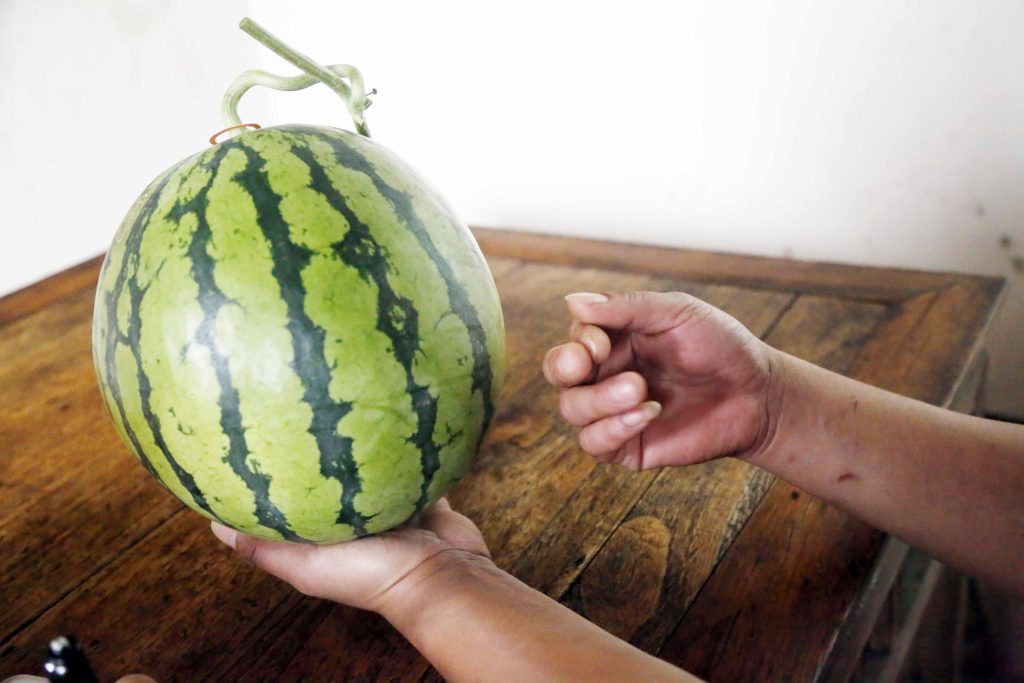
After several years of waiting for my watermelons and ending up with boring fruit, I have learned to look at the tendril closest to the fruit. It should turn brown and dry. The bottom should also have a creamy yellow spot.
Waiting can definitely play a part in how good your watermelon tastes. A few days can definitely make a difference.
Harvesting Watermelon at Home
When is a watermelon ripe? Look for these signs:
- Ground spot turns creamy yellow
- Resists pressure with a fingernail
- Deep thumping sound
- Tendrils turn brown and dry
Cut with a sharp knife. Do not pull off the vine.

Common Mistakes and How to Avoid Them
1. Planting Too Early
Seeds will rot in the soil if it’s cold. You should wait until the warm temperatures are here to stay.
2. Overcrowding

If the vines are crowded, they will compete with each other for space. The fruit will be affected.
Therefore, space the vines correctly.
3. Too Much Fertilizer
If there is too much nitrogen used as a fertilizer, there will be many leaves and few melons. Once the flowers start coming up, switch the fertilizer type.
4. Ignoring Pollination
If there is no pollination, there will be no fruit. You have to invite the bees or manually pollinate.
Let’s Be Honest: My First Watermelon Harvest Was Lit

I planted my very first homegrown watermelon in a large fabric pot placed in my sun-drenched patio area. I didn’t go too deep with the soil mixture; just good quality soil with plenty of moisture was enough.
Then, when the vines started growing like crazy, and the yellow flowers started producing fruit, I was still unsure …
Will the bees pollinate?
But pollinate they did.
My very first homegrown watermelon ended up ripe and ready to go, becoming a parch be darned, sugar sticky, and running down my chin experience that didn’t even remotely taste like the store-bought variety.
The best part was that it was even better than I thought it was going to be, not because it was perfect in any way, but because it was 100 percent mine. All the things I ever wanted in life came rolling in with this melon.
Troubleshooting Quick Guide
| Problem | Likely Cause | Fix |
Small fruits | Poor pollination | Provide additional flowers to attract bees, or manually pollinate |
Split fruit | Irregular watering | Water consistently, and mulching helps |
Wilting vines | Heat stress, underwatering | Deep water in the morning |
No blooms | Too much nitrogen | Change fertilizer type |
I Continue to Plant Watermelon Every Season
Watermelon is not for everyone. You need sun, patience, and focus to grow watermelon in your garden.
But somehow, when you cut that melon on a hot day, it tastes very different from the one you bought at the store.
There is something especially pleasurable about watching a vine grow massively and then realizing that you have made it grow from a tiny seed.
Every year, I lose my mind. And why not ?!
Why is it a Good Idea to Grow Watermelon at Home?

Growing watermelons at home is more than just consuming an edible fruit; it is an experience that requires you to be in sync with the indigenous culture while also providing you with a substantial yield at the end of the season.
Growing watermelons can be done in any manner you choose: conventionally in the ground or in any space you choose.
If you are interested in learning more about growing watermelons at home but are unsure about the variety, timing, and space required, I can definitely assist you with that.
Please visit the Contact page of this blog and let me know the exact details about your location and conditions. I shall do my best to get back to you within two days with some advice.